DNS Record Types Explained
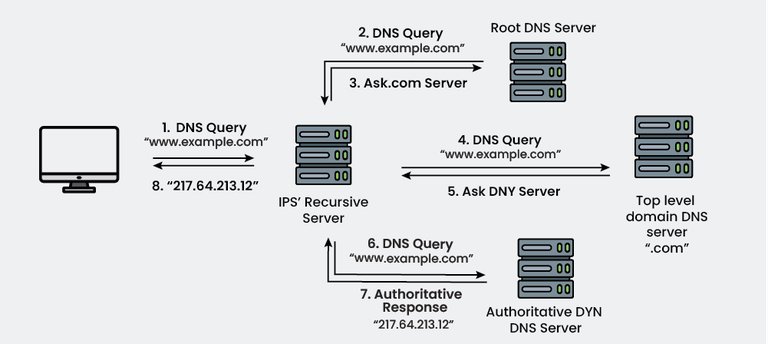
When you type a website name like google.com into your browser and press Enter, something important happens in the background. The browser does not already know where that website is located. It does not understand names like “google.com” on its own. What it really needs is a numeric address that tells it exactly which server to contact. The system that helps the browser find this address is called DNS.
Understanding DNS is not about memorizing technical terms. It is about understanding how the internet organizes information so that websites, emails, and services can work smoothly together.
What DNS Is (Explained in Very Simple Terms)
DNS stands for Domain Name System. It works like the phonebook of the internet. Humans prefer names because they are easy to remember, but computers communicate using numbers. DNS acts as a translator between these two worlds.
When you enter a website name, DNS converts that name into an IP address, which is the actual location of the server hosting the website. Without DNS, using the internet would be extremely difficult because people would need to remember long numerical addresses instead of simple domain names.
DNS does not host websites. It only tells the browser where the website is located, just like a phonebook does not make calls but helps you find the correct number.
Why DNS Records Are Needed
A single domain needs to handle many responsibilities. It must show a website, receive emails, prove ownership, and sometimes redirect traffic. Trying to manage all of this with one instruction would be confusing and unreliable.
DNS records solve this problem by breaking responsibilities into small, clear instructions. Each record type answers one specific question, such as where the website lives, where emails should be delivered, or who manages the domain.
This separation makes DNS easier to update, easier to scale, and less likely to break. If one record changes, the others continue to work normally.
What an NS Record Is (Who Is Responsible for a Domain)
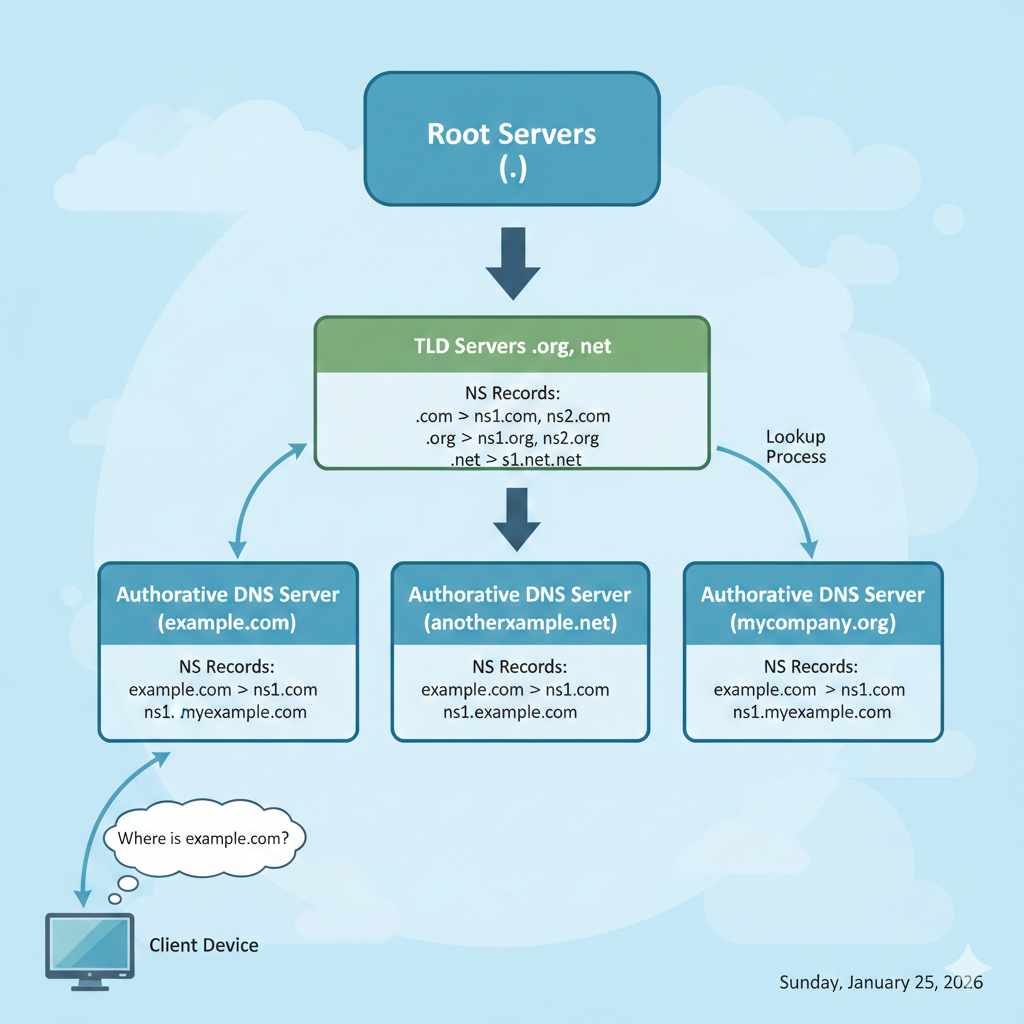
NS records, or Name Server records, define who is responsible for a domain. They tell the internet which DNS servers hold the official information for that domain.
When a browser or another system wants to know something about a domain, the first thing it needs to know is where to ask. The NS record provides this direction. It does not give the website address itself. It only points to the servers that have the correct answers.
You can think of NS records as the authority that manages the domain’s information. Without them, the internet would not know which servers to trust for that domain.
What an A Record Is (Domain to IPv4 Address)
The A record is one of the most important DNS records. It connects a domain name to an IPv4 address. This is the moment where the browser finally gets the actual location of the website.
When the browser receives the IP address from the A record, it knows exactly which server to contact to load the website. This step is essential because servers cannot be reached using names alone.
In simple terms, the A record is what turns a readable website name into a usable destination for the browser.
What an AAAA Record Is (Domain to IPv6 Address)
The AAAA record performs the same function as an A record, but it uses IPv6 instead of IPv4. IPv6 is a newer system designed to handle the growing number of devices on the internet.
Some networks and devices prefer IPv6 when it is available. In such cases, the browser will use the AAAA record instead of the A record. Both records can exist together for the same domain, allowing flexibility depending on the network environment.
From a beginner’s perspective, it is enough to understand that AAAA records exist to support newer and larger internet addressing.
What a CNAME Record Is (One Name Pointing to Another Name)
A CNAME record creates an alias. Instead of pointing directly to an IP address, it points one domain name to another domain name.
This is commonly used for subdomains like www . When a browser looks up a name with a CNAME record, it is told to look up another name instead. That second name then has the A or AAAA record with the real address.
The key idea is that CNAME records help avoid duplication. They allow multiple names to refer to the same destination without repeating IP addresses everywhere.
A common beginner confusion is thinking that CNAME records replace A records. They do not. CNAME records eventually lead to an A or AAAA record.
What an MX Record Is (How Emails Find Your Mail Server)
MX records are responsible for email delivery. They tell the internet which mail servers should receive emails for a domain.
When someone sends an email to an address like contact@example.com , the email system checks the MX records for example.com. These records specify where the email should be delivered.
MX records are separate from website records because email and web traffic serve different purposes. A domain can host its website in one place and handle emails in another, and MX records make this separation possible.
A common confusion is mixing up NS and MX records. NS records define authority, while MX records define email routing.
What a TXT Record Is (Extra Information and Verification)
TXT records store plain text information related to a domain. They are often used for verification and security purposes rather than routing traffic.
Many services ask domain owners to add TXT records to prove ownership of a domain. Email systems also use TXT records to verify that emails are coming from trusted servers.
TXT records do not affect how a website loads or where emails are sent. Instead, they act as supporting information that helps build trust and prevent misuse.
How All DNS Records Work Together for One Website
For a single website to function properly, multiple DNS records work together behind the scenes. NS records define where the domain’s information is managed. A and AAAA records tell browsers where the website is hosted. CNAME records handle alternate names. MX records route emails. TXT records provide verification and security.
Each record has a specific role, and none of them try to do everything. This design keeps DNS organized, reliable, and easy to maintain. If one part changes, the rest of the system continues to function smoothly.
Understanding DNS is an important step in understanding how the internet really works. Behind every website you visit and every email you send, DNS quietly does its job of connecting names to the right places. By breaking DNS into simple records and understanding the problem each one solves, it becomes much less intimidating. You do not need to memorize technical details to appreciate DNS. You just need to see it as an organized system that makes the internet usable and human-friendly.
